
Do I Need a Trust If I Own a Home in Texas?

For many Texans, a home is one of their most valuable assets. Your home may be where you raised your children or a property you worked hard to pay off. Naturally, you want to protect it and ensure it passes to your loved ones according to your wishes.

One of the most common questions homeowners ask is whether owning a home means they need a trust.

While many people associate trusts with larger estates, they can also benefit homeowners. They can simplify property transfers, support future planning, and provide peace of mind.

(512) 737-8404

Do i need a trust if i own a home in texas

The answer, however, is not the same for everyone. Some homeowners may benefit from establishing a revocable living trust, while others may find that a carefully prepared will and other estate planning documents meet their needs.

Understanding how trusts work and when they may be appropriate can help you make informed decisions about protecting your home and the people who matter most.

What Is a Revocable Living Trust?

A revocable living trust allows you to transfer assets, including your home, into a trust. You still maintain control of those assets during your lifetime.

In most cases, you serve as your own trustee. This means you continue making decisions about your property. You can live in your home, refinance it, sell it, or purchase additional property just as you would if the trust did not exist.

The trust also names a successor trustee. If you become unable to manage your affairs or pass away, the successor trustee manages and distributes the trust assets according to your instructions.

You can generally modify or revoke the trust as your circumstances change. This makes it a common estate planning tool for individuals and families who want flexibility while maintaining control of their assets.

Does Owning a Home Mean You Need a Trust?

Simply owning a home does not automatically mean you need a trust.

Many Texas homeowners have effective estate plans that rely on a properly drafted will, financial and medical powers of attorney, and other supporting documents.

Depending on your family situation and the complexity of your estate, those documents may provide the protection you need.

However, there are situations where a trust may offer additional advantages that a will alone cannot provide.

Rather than asking whether every homeowner needs a trust, a better question is whether a trust helps accomplish your estate planning goals.

For example, you may want to simplify the transfer of your home or reduce the likelihood of probate. You may also want to plan for incapacity or control how your beneficiaries receive your property.

These goals—not simply homeownership—often determine whether a trust is appropriate.

Benefits of a Trust for Homeowners

A revocable living trust offers several potential benefits that make it an attractive option for many homeowners.

Helping Avoid Probate

Many people establish a trust to help their loved ones avoid probate. This benefit generally applies to assets they properly transfer into the trust.

Probate is the legal process that administers a person’s estate after death. Although Texas probate is often more streamlined than in many other states, it still involves court filings, legal procedures, and administrative responsibilities.

When you title your home in a revocable living trust, your beneficiaries may receive it according to the trust’s instructions without probate.

For many families, this can simplify the administration of the estate and reduce delays during an already difficult time.

Planning for Incapacity

Estate planning is about more than deciding who receives your property after you pass away. It also helps prepare for situations where you may become unable to manage your own financial affairs.

If you place your home in a revocable living trust, your successor trustee can generally manage the trust assets if you become incapacitated.

This may allow your affairs to continue without the need for a court-appointed guardian to manage trust property.

Planning for incapacity can provide peace of mind for you and your family. It gives someone you trust the authority to act according to your wishes.

Maintaining Privacy

Another advantage of a trust is privacy.

A will generally becomes part of the public record during probate proceedings. In contrast, the administration of a revocable living trust typically remains private.

For families who prefer to keep financial matters and property transfers out of the public eye, this may be an important benefit.

Greater Control Over Asset Distribution

A trust gives you greater control over when, how, and under what circumstances your beneficiaries receive your property.

This flexibility can help when beneficiaries are minors or have special circumstances. It can also create a more structured plan for transferring family assets.

The ability to customize distributions is one reason many families choose to include a trust as part of a comprehensive estate plan.

Simplifying the Management of Your Estate

As families grow and financial situations become more complex, managing an estate can become more challenging.

A trust clearly explains how your trustee should manage property, pay trust-related expenses, and distribute assets according to your wishes.

Clear instructions may reduce confusion for families with multiple beneficiaries or complex goals. They may also make estate administration more efficient.

When a Will May Be Enough

People often use trusts for larger estates, but homeowners may also benefit from them. A trust may help protect a family and simplify property transfers.

For many individuals and families, a comprehensive will may effectively accomplish their estate planning goals.

A will allows you to:

  • Name the people who will inherit your property.
  • Appoint an executor to administer your estate.
  • Name guardians for minor children.
  • Provide instructions for distributing your assets.

If your estate is relatively straightforward and your goals are simple, a will may provide the level of protection you need.

Your estate planning attorney can help determine whether your circumstances call for a will alone or whether adding a trust could provide additional advantages.

Common Misconceptions About Trusts

Several misconceptions prevent homeowners from considering whether a trust is appropriate for their situation.

“Trusts Are Only for Wealthy Individuals.”

One of the most common misconceptions is that trusts are reserved for people with significant wealth.

While trusts are often used in larger estates, they may also provide practical benefits for homeowners whose primary concern is protecting their family and simplifying the transfer of property.

Your estate planning goals should determine whether you establish a trust, not the value of your estate.

“I Lose Control of My Home.”

Many people assume that placing their home into a trust means giving up ownership or control.

With a revocable living trust, that is generally not the case.

You typically remain the trustee during your lifetime and continue making decisions about your property, including selling, refinancing, or making improvements to your home.

“A Trust Replaces a Will.”

Even if you establish a trust, you will likely still need a will as part of your estate plan.

A will can address assets you did not transfer into the trust and perform other important legal functions. Estate planning documents work together rather than replace one another.

“Once I Create a Trust, I Never Need to Update It.”

Life changes, and your estate plan should change with it.

Review your estate plan after major life events. These may include marriage, divorce, a new child or grandchild, a property purchase, or a significant financial change.

Keeping your trust and other estate planning documents up to date helps ensure they continue to reflect your wishes.

How an Estate Planning Attorney Can Help

Choosing between a will and a trust involves more than deciding who receives your home after your death. Every family has different finances, goals, and personal circumstances. Your estate plan should reflect those unique needs.

An experienced estate planning attorney can evaluate your assets and explain your planning options. They can also help you decide whether you need a will, a trust, or both.

They can also prepare and coordinate your estate planning documents so they work together as intended.

Protecting Your Home Starts with the Right Estate Plan

Owning a home in Texas does not automatically mean you need a trust, but it is an important reason to review your estate plan. For some homeowners, a revocable living trust can provide valuable benefits such as avoiding probate, planning for incapacity, maintaining privacy, and offering greater flexibility in how assets are managed and distributed. For others, a carefully prepared will may provide the appropriate level of protection.

Because every family has different priorities and long-term goals, there is no one-size-fits-all solution. An experienced estate planning attorney can help you understand your options and create a plan that protects your home, provides for your loved ones, and reflects your wishes.

Frequently Asked Questions

Can I transfer my home into a revocable living trust after I purchase it?

Yes. A home can generally be transferred into a revocable living trust at any time as part of your estate plan.

Does putting my home in a trust help avoid probate in Texas?

Yes. If your home is properly titled in a revocable living trust, it can generally pass to your beneficiaries without going through probate.

Can I still sell or refinance my home if it’s in a trust?

Yes. If you are the trustee of your revocable living trust, you generally retain full control of your home and can sell or refinance it.

Does a trust protect my home if I become incapacitated?

A revocable living trust can allow your successor trustee to manage the trust assets if you become unable to do so yourself, helping ensure your affairs continue according to your wishes.


Our Austin, TX Office Location

Transfer on Death Deeds (TODD) vs. Lady Bird Deeds in Texas

Understanding Transfer on Death Deeds and Lady Bird Deeds in Texas

For many Texas homeowners, their home is one of the most valuable assets they will ever own. Deciding how that property will transfer to loved ones is an important part of creating a comprehensive estate plan.

Fortunately, Texas offers several estate planning tools that may help simplify the transfer of real estate after death. Two of the most common options are the Transfer on Death Deed (TODD) and the Lady Bird Deed, also known as an Enhanced Life Estate Deed.

Although both tools are designed to help transfer real estate outside of probate, they operate differently and may be appropriate for different estate planning goals. Understanding how each option works can help homeowners make informed decisions about protecting their property and preserving their legacy.

Death deeds lady bird deeds

At Henington Lewis Law Firm, we help Texas families understand how real estate planning strategies fit into a broader estate plan designed around their unique family, financial, and long-term planning goals.

What Is a Transfer on Death Deed?

A Transfer on Death Deed is a legal document that allows a homeowner to designate one or more beneficiaries who will receive ownership of real estate after the owner’s death.

During the owner’s lifetime, the homeowner generally maintains complete ownership and control of the property. The named beneficiary does not receive ownership rights until the owner’s death, allowing the owner to continue using, selling, refinancing, or otherwise managing the property while they are alive.

A Transfer on Death Deed may help:

  • Transfer real estate outside of probate
  • Maintain ownership and control during the owner’s lifetime
  • Simplify the transfer of property after death
  • Reduce delays for surviving family members
  • Coordinate with an overall estate planning strategy

To be effective, a Transfer on Death Deed must comply with Texas legal requirements and be properly executed and recorded before the property owner’s death.

What Is a Lady Bird Deed?

A Lady Bird Deed is another estate planning tool available to Texas homeowners. Like a Transfer on Death Deed, it is designed to transfer ownership of real estate after death while allowing the owner to retain control of the property during their lifetime.

One of the primary advantages of a Lady Bird Deed is the flexibility it may provide to homeowners during their lifetime. In many situations, homeowners can continue making decisions about the property without obtaining permission from future beneficiaries.

A Lady Bird Deed may allow the property owner to:

  • Sell the property
  • Refinance the property
  • Mortgage the property
  • Change beneficiaries if circumstances change
  • Revoke the deed during their lifetime

Because of this flexibility, many Texas homeowners include Lady Bird Deeds as part of a broader estate planning strategy, particularly when they want to simplify the transfer of real estate while maintaining full control over the property.

Similarities Between Transfer on Death Deeds and Lady Bird Deeds

Transfer on Death Deeds and Lady Bird Deeds share several important characteristics. Both are commonly used to help transfer real estate outside of probate, making them valuable tools for homeowners who want to simplify the inheritance process for their families.

Both options generally allow homeowners to:

  • Retain ownership during their lifetime
  • Designate beneficiaries for the property
  • Help reduce probate-related delays
  • Preserve greater privacy than a traditional probate proceeding
  • Support a comprehensive estate planning strategy

Although these similarities often lead homeowners to compare the two, each option has unique legal characteristics that may make one more appropriate than the other depending on the family’s goals and overall estate plan.

Key Differences Between a Transfer on Death Deed and a Lady Bird Deed

While both deeds may accomplish similar goals, they are not identical.

A Transfer on Death Deed generally allows ownership of the property to transfer automatically to named beneficiaries after the owner’s death, provided the deed was properly executed and recorded.

A Lady Bird Deed also transfers ownership after death, but it is often chosen because it allows the property owner to retain broader authority over the property throughout their lifetime.

A Transfer on Death Deed may:

  • Transfer ownership after the property owner’s death
  • Require proper execution and recording before death
  • Allow designated beneficiaries to receive the property
  • Work well for straightforward property transfers

A Lady Bird Deed may:

  • Transfer ownership after the property owner’s death
  • Allow the owner to retain broad authority over the property during life
  • Provide flexibility if circumstances change
  • Be used as part of a broader estate planning strategy

When Might Each Option Be Appropriate?

Every family’s situation is different, which means there is no single estate planning tool that works for everyone.

A Transfer on Death Deed may be appropriate for homeowners who want a relatively straightforward method for transferring a home to designated beneficiaries while avoiding probate.

A Lady Bird Deed may be considered by homeowners who want to retain significant flexibility over their property throughout their lifetime while incorporating the deed into a broader estate planning strategy.

The most appropriate option often depends on factors such as:

  • Whether you own multiple properties
  • Whether you already have a revocable living trust
  • Your family structure
  • Future plans for buying or selling property
  • Long-term estate planning goals
  • Probate avoidance objectives

Because every estate plan is unique, many homeowners choose to review these options with an estate planning attorney before deciding which strategy best fits their needs.

How Do You Choose Between a Transfer on Death Deed and a Lady Bird Deed?

Choosing between these two estate planning tools depends on your individual circumstances rather than a single “best” option. While both deeds may help transfer real estate outside of probate, they serve different planning needs and should be considered as part of your overall estate plan.

Some of the factors that may influence your decision include:

  • Your family structure
  • Whether you already have a revocable living trust
  • The number of properties you own
  • Your long-term estate planning goals
  • Whether probate avoidance is one of your primary objectives
  • Future plans for selling, refinancing, or transferring your property

Because every family’s situation is unique, many Texas homeowners choose to discuss these options with an estate planning attorney before deciding which approach best supports their long-term estate planning goals. 

How These Deeds Fit Into a Complete Estate Plan

A Transfer on Death Deed or Lady Bird Deed is only one piece of an estate plan. Many Texas homeowners also use wills, trusts, powers of attorney, and advance directives to create a coordinated strategy for protecting their family and property.

A comprehensive estate plan may also include:

  • A revocable living trust
  • A will
  • Durable power of attorney
  • Medical power of attorney
  • Advance directives
  • Beneficiary reviews

The right combination of estate planning documents depends on your assets, family circumstances, and long-term planning objectives. 

Speak With a Texas Estate Planning Attorney

At Henington Lewis Law Firm, we help Texas homeowners understand the differences between Transfer on Death Deeds, Lady Bird Deeds, trusts, wills, and other estate planning tools.

Whether you are protecting your primary residence, vacation home, investment property, or other real estate, our team can help you explore strategies designed to simplify property transfers, protect your family’s interests, and support your long-term estate planning goals.

Frequently Asked Questions

What is the main difference between a Transfer on Death Deed and a Lady Bird Deed?

Both documents may help transfer real estate outside of probate, but they work differently. A Transfer on Death Deed allows property to pass to designated beneficiaries after the owner’s death, while a Lady Bird Deed generally provides the property owner with greater flexibility to manage, sell, or refinance the property during their lifetime.

Do Transfer on Death Deeds and Lady Bird Deeds avoid probate in Texas?

When properly prepared and used under the appropriate circumstances, both may help transfer real estate outside of probate. However, whether probate can be avoided depends on the property owner’s overall estate plan, how the property is titled, and other legal considerations.

Can I revoke or change a Transfer on Death Deed or Lady Bird Deed?

In many situations, property owners may revoke or update these deeds during their lifetime if legal requirements are followed. The appropriate process depends on the type of deed and the owner’s specific circumstances.

Should I use a Transfer on Death Deed if I already have a trust?

Some homeowners with a revocable living trust may not need a Transfer on Death Deed, while others may benefit from incorporating one into their estate plan. The right approach depends on how your assets are owned and how your overall estate plan is structured.

Can a Transfer on Death Deed or Lady Bird Deed be used for multiple properties?

Potentially. Homeowners who own more than one property may be able to use these estate planning tools for multiple pieces of real estate. The most appropriate strategy depends on the type of properties, ownership structure, and long-term estate planning goals.

Which option is better for my estate plan?

There is no one-size-fits-all answer. The most appropriate option depends on your family situation, real estate holdings, probate planning goals, and whether your estate plan includes other tools such as a trust or will. An estate planning attorney can help you evaluate which approach best aligns with your overall estate planning objectives.


Our Austin, TX Office Location

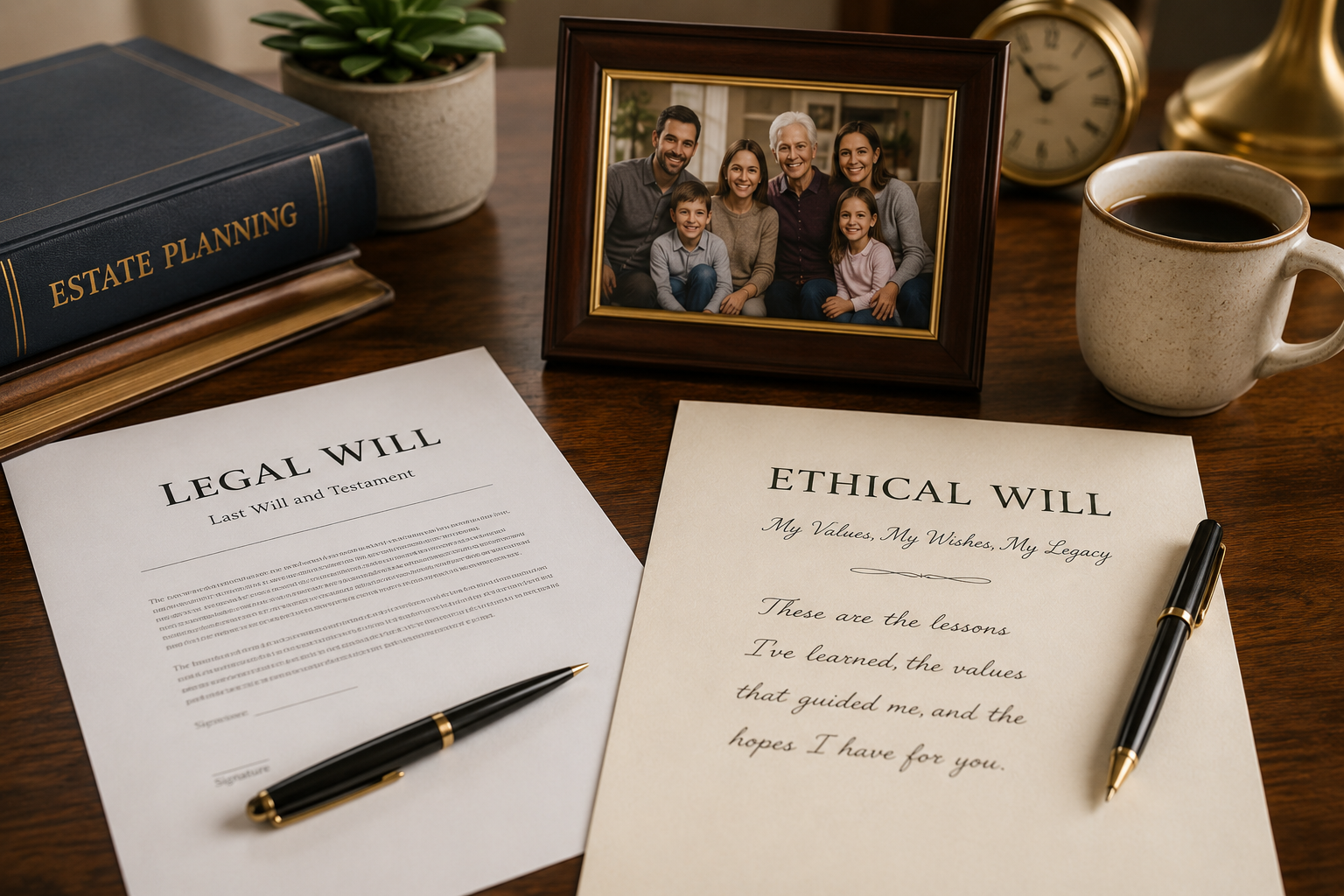
Difference Between an Ethical Will and a Legal Will

Understanding the Two Types of Wills

When most people hear the word “will,” they think of a legal document that distributes assets after death. While legal wills are a foundational part of estate planning, there is another type of will that many families are discovering called an Ethical Will.

Although both documents can be valuable, they serve very different purposes.

A Legal Will focuses on transferring property, assets, and legal responsibilities. An Ethical Will focuses on passing down personal values, life lessons, beliefs, family history, and wisdom.

Ethical Will and a Legal Will

Many Texas families are beginning to incorporate both into their legacy planning to preserve not only wealth but also family traditions and personal stories.

At Henington Lewis Law Firm, we help families understand how legal documents and personal legacy planning can work together to create a more complete estate plan.

What Is a Legal Will?

A Legal Will is a legally enforceable document that outlines how your assets should be distributed after your death.

A Legal Will may address:

  • Distribution of property
  • Naming beneficiaries
  • Selecting an executor
  • Guardianship nominations for minor children
  • Instructions regarding certain assets
  • Probate administration

A properly executed Legal Will is recognized by Texas law and may be submitted to probate court after death.

For many families, it serves as the foundation of their estate plan.

What Is an Ethical Will?

An Ethical Will is not a legal document.

Instead, it is a personal message intended for loved ones that communicates values, experiences, guidance, and family history.

An Ethical Will may include:

  • Personal life lessons
  • Family stories
  • Core values and beliefs
  • Words of encouragement
  • Advice for future generations
  • Family traditions and memories

Unlike a Legal Will, an Ethical Will does not transfer assets or create legal rights.

Its purpose is emotional and personal rather than legal.

Why More Families Are Creating Ethical Wills

Many people realize that financial assets are only one part of their legacy.

Families often want to preserve:

  • Family history
  • Personal experiences
  • Cultural traditions
  • Spiritual beliefs
  • Lessons learned throughout life
  • Messages for children and grandchildren

An Ethical Will can provide future generations with insight that may otherwise be lost over time.

Can You Have Both an Ethical Will and a Legal Will?

Yes.

In fact, many families choose to have both.

A Legal Will helps transfer assets and address legal matters.

An Ethical Will helps preserve family values and personal memories.

Together, they can create a more complete legacy plan.

How Trust-Based Estate Planning Fits Into Legacy Planning

As families build wealth, many are moving beyond traditional wills and incorporating trusts into their estate plans.

A trust may help:

  • Avoid probate for certain assets
  • Maintain privacy
  • Simplify administration
  • Create long-term inheritance plans
  • Protect family assets

Many families pair trust planning with Ethical Wills to preserve both financial and personal legacies.

Common Misconceptions About Ethical Wills

Some people mistakenly believe an Ethical Will can replace a Legal Will.

It cannot.

An Ethical Will:

  • Does not distribute assets
  • Does not appoint guardians
  • Does not avoid probate
  • Does not create legal obligations

Instead, it complements traditional estate planning documents.

Common Estate Planning Mistakes Families Make

Some of the most common issues include:

  • Having no Legal Will
  • Failing to update estate planning documents
  • Leaving no guidance for future generations
  • Assuming family members know their wishes
  • Not coordinating wills and trusts
  • Overlooking legacy planning entirely

A comprehensive estate plan often addresses both legal and personal goals.

Why Estate Plan Reviews Matter

Estate plans should evolve as your family, assets, and goals change.

Regular reviews can help ensure:

  • Beneficiaries remain current
  • Trusts remain properly funded
  • Executors and trustees are still appropriate
  • Family circumstances are reflected accurately
  • Legacy planning goals remain aligned with your wishes

Many families review their plans every three to five years or after major life events.

Speak With a Texas Estate Planning Attorney

At Henington Lewis Law Firm, we help Texas families create comprehensive estate plans that address both legal and personal legacy goals.

Whether you are considering a will, trust, Ethical Will, or a complete estate plan, our goal is to help you create a meaningful plan that protects your family and preserves your legacy.

Frequently Asked Questions

What is the main difference between an Ethical Will and a Legal Will?

A Legal Will is a legally enforceable document used to distribute assets and address estate administration matters. An Ethical Will is a personal document used to share values, life lessons, family stories, and guidance with loved ones.

Is an Ethical Will legally binding in Texas?

No. An Ethical Will is not legally enforceable and does not have legal authority over assets, beneficiaries, or probate matters.

Can an Ethical Will be included with my estate plan?

Yes. Many families choose to keep an Ethical Will alongside their estate planning documents to provide personal guidance and preserve family history.

What should be included in an Ethical Will?

Common topics include life lessons, family traditions, personal values, spiritual beliefs, important memories, and messages for future generations.

Why are more families creating Ethical Wills today?

Many families want to pass down more than financial assets. An Ethical Will helps preserve family stories, wisdom, and values that may otherwise be lost over time.

Do I still need a Legal Will if I create an Ethical Will?

Yes. An Ethical Will does not replace a Legal Will, trust, or other estate planning documents. Most families benefit from having legally enforceable documents in addition to personal legacy planning materials.


Our Austin, TX Office Location

Managing Cryptocurrency and Digital Wallets in Your Estate Plan

Understanding Digital Assets in Modern Estate Planning

Estate planning has traditionally focused on assets such as real estate, bank accounts, investment portfolios, and personal property. Today, many individuals also own digital assets, including cryptocurrency, online financial accounts, and digital wallets.

Additionally, as cryptocurrency adoption continues to grow, more Texas families are realizing that these assets require special planning considerations. Unlike traditional financial accounts, digital assets can be difficult or impossible for loved ones to access without proper instructions.

Without a clear estate plan, cryptocurrency holdings may become inaccessible, resulting in the permanent loss of assets intended for future generations.

At Henington Lewis Law Firm, we help families understand how digital assets and cryptocurrency may fit into a comprehensive estate planning strategy.

cryptocurrency and digital wallts for estatet plan

What Are Digital Assets?

Digital assets can include a wide variety of online accounts and electronically stored property.

Examples may include:

  • Cryptocurrency holdings
  • Bitcoin and Ethereum wallets
  • Hardware wallets
  • Online brokerage accounts
  • Digital payment accounts
  • NFTs (Non-Fungible Tokens)
  • Online business accounts
  • Digital intellectual property

Many people are surprised to learn that these assets may not automatically transfer to loved ones without proper planning.

Why Cryptocurrency Requires Special Estate Planning

Unlike traditional bank accounts, however, cryptocurrency is often controlled through private keys, seed phrases, passwords, and digital wallet access credentials.

If this information is lost, assets may become permanently inaccessible.

Common risks include:

  • Lost wallet credentials
  • Missing recovery phrases
  • No designated fiduciary access
  • Family members unaware of holdings
  • Incomplete asset inventories
  • Security concerns and theft risks

As a result, proper planning can help ensure digital assets remain accessible to intended beneficiaries.

How Cryptocurrency Can Be Included in an Estate Plan

Many estate plans can be updated to account for digital assets and cryptocurrency ownership.

Common planning strategies include:

  • Creating a digital asset inventory
  • Documenting wallet locations
  • Identifying trusted fiduciaries
  • Updating trust provisions
  • Coordinating powers of attorney
  • Providing secure access instructions

The goal is to balance security with accessibility for future administration.

Why More Investors Are Using Trusts for Digital Assets

Additionally, many cryptocurrency owners are incorporating trusts into their estate plans.

A trust may help:

  • Provide continuity during incapacity
  • Create structured inheritance instructions
  • Maintain privacy
  • Coordinate multiple asset types
  • Simplify administration for beneficiaries
  • Consolidate digital and traditional assets under one plan

As digital wealth increases, trust-based planning is becoming more common among investors.

Common Challenges Families Face With Cryptocurrency Inheritance

Digital assets often create unique challenges after death.

Some common issues include:

  • Unknown wallet locations
  • Lost passwords or recovery phrases
  • Lack of instructions for heirs
  • Security breaches
  • Difficulty identifying account ownership
  • Delays in administration

Therefore, planning ahead can help reduce these risks and provide greater clarity for loved ones.

Common Estate Planning Mistakes With Digital Assets

Some of the most common mistakes include:

  • Failing to disclose cryptocurrency ownership
  • Storing passwords insecurely
  • Not updating estate planning documents
  • Leaving no instructions for heirs
  • Assuming family members can easily access wallets
  • Failing to coordinate trusts and powers of attorney

These issues can create significant complications for beneficiaries.

Why Regular Estate Plan Reviews Matter

Digital assets change quickly.

New accounts, wallets, investments, and technologies may be added over time.

Regular reviews can help ensure:

  • Digital asset inventories remain current
  • Fiduciaries have proper authority
  • Trust provisions remain effective
  • Access instructions stay updated
  • New investments are properly addressed

Many individuals review their estate plans every three to five years or after significant financial changes.

Speak With a Texas Estate Planning Attorney

At Henington Lewis Law Firm, we help Texas families incorporate cryptocurrency, digital wallets, and other digital assets into comprehensive estate planning strategies.

Our goal is to help families protect both traditional and digital wealth while creating clear instructions for future generations.

Frequently Asked Questions

What happens to cryptocurrency if I die without an estate plan?

If family members do not know about the cryptocurrency or cannot access wallet credentials, the assets may become permanently inaccessible even if heirs are legally entitled to them.

Should cryptocurrency be included in a trust?

In many situations, a trust can help coordinate cryptocurrency with other assets and provide instructions for management and distribution. The best approach depends on your overall estate planning goals.

What is the most important piece of cryptocurrency estate planning?

One of the most important steps is creating a secure inventory of digital assets and ensuring trusted individuals can access necessary information when appropriate.

Can a power of attorney manage cryptocurrency?

However, powers of attorney should specifically address digital assets and provide appropriate authority under applicable laws.

Do hardware wallets need to be addressed in an estate plan?

Yes. Hardware wallets often contain valuable digital assets, and beneficiaries may need instructions regarding location, access, and recovery information.

How often should cryptocurrency estate planning documents be updated?

Most individuals should review their plans every three to five years or whenever significant cryptocurrency purchases, wallet changes, or investment changes occur.


Our Austin, TX Office Location

Protect Generational Wealth

Understanding Generational Wealth Planning

Many families spend decades building wealth through real estate, businesses, investments, retirement accounts, and personal assets. Without proper planning, however, a significant portion of that wealth can be lost through probate, taxes, legal disputes, creditor issues, or poor inheritance planning.

Generational Wealth

Generational wealth planning focuses on preserving assets and creating a strategy that allows wealth to pass efficiently from one generation to the next.

For many Texas families, protecting generational wealth is not simply about transferring assets. It is about protecting family values, preserving opportunities for future generations, and creating a lasting legacy.

At Henington Lewis Law Firm, we help families develop estate planning strategies designed to protect assets and support long-term wealth preservation goals.

What Is Generational Wealth?

Generational wealth refers to assets that are passed from one generation to another.

These assets often include:

  • Real estate
  • Family businesses
  • Investment accounts
  • Retirement savings
  • Life insurance proceeds
  • Mineral rights and land holdings
  • Personal property and family heirlooms

The goal is to ensure these assets benefit children, grandchildren, and future generations rather than being diminished by unnecessary complications.

Why Generational Wealth Can Be Lost

Many families assume wealth will automatically transfer to future generations. Unfortunately, several risks can reduce or eliminate inherited wealth.

Common threats include:

  • Probate delays and expenses
  • Family disputes
  • Poor estate planning
  • Creditor claims
  • Divorce-related asset division
  • Incapacity planning failures
  • Outdated beneficiary designations

Without proper planning, assets that took a lifetime to build can be significantly reduced.

How Trusts Can Help Protect Generational Wealth

Many families use revocable and irrevocable trusts as part of a long-term wealth preservation strategy.

Trusts may help:

  • Avoid probate for certain assets
  • Maintain privacy
  • Control how assets are distributed
  • Protect younger beneficiaries from poor financial decisions
  • Provide long-term asset management
  • Create customized inheritance plans

For many families, trusts become the foundation of a comprehensive generational wealth strategy.

Why More Families Are Moving Beyond Traditional Wills

While wills remain important estate planning tools, many families with substantial assets are incorporating trusts into their plans.

A traditional will generally:

  • Must go through probate
  • Becomes public record
  • Provides limited long-term asset control

A trust-based plan may:

  • Help avoid probate
  • Maintain family privacy
  • Provide greater control over inheritance
  • Create long-term protection for beneficiaries
  • Simplify future asset transfers

This is one reason many Texas families are transitioning from will-based plans to trust-centered estate planning.

Common Strategies Used to Preserve Family Wealth

Families often combine multiple planning tools to protect assets.

Common strategies include:

  • Revocable living trusts
  • Asset protection planning
  • Business succession planning
  • Beneficiary designation reviews
  • Real estate transfer planning
  • Family inheritance planning
  • Powers of attorney and incapacity planning

The best strategy depends on the family’s goals, assets, and future vision.

Common Mistakes Families Make

Some of the most common wealth preservation mistakes include:

  • Failing to update estate planning documents
  • Relying solely on a simple will
  • Not planning for incapacity
  • Leaving assets without clear beneficiary instructions
  • Failing to coordinate real estate and trust planning
  • Delaying estate planning until later in life

Proactive planning often provides more flexibility and protection.

Why Estate Plan Reviews Are Important

As assets grow and family circumstances change, estate plans should evolve as well.

Regular reviews can help ensure:

  • Trusts remain properly funded
  • Beneficiaries remain current
  • Real estate ownership aligns with planning goals
  • Business succession plans remain effective
  • Wealth preservation objectives are still being met

Many families review their estate plans every three to five years or after major life events.

Speak With a Texas Estate Planning Attorney

At Henington Lewis Law Firm, we help Texas families create estate plans designed to protect generational wealth, preserve family assets, and support long-term legacy planning goals.

Our goal is to help families create customized strategies that provide clarity, protection, and confidence for future generations.

Frequently Asked Questions

What is considered generational wealth?

Generational wealth generally includes assets that are passed from one generation to another, such as real estate, investments, family businesses, retirement accounts, and other valuable property.

How can a trust help protect generational wealth?

A trust may provide greater control over how assets are distributed, help avoid probate for certain assets, maintain privacy, and create long-term inheritance structures for beneficiaries.

Why do wealthy families often use trusts instead of relying only on wills?

Many families use trusts because they may help avoid probate, provide privacy, create long-term asset management strategies, and allow more control over inheritance distributions.

Can real estate be part of a generational wealth strategy?

Yes. Real estate is often one of the largest assets families pass to future generations and is commonly included in estate and trust planning strategies.

How often should a generational wealth plan be reviewed?

Most estate planning professionals recommend reviewing wealth preservation and estate planning documents every three to five years or after significant financial or family changes.

What is one of the biggest mistakes families make when trying to preserve wealth?

One of the most common mistakes is failing to update estate planning documents as assets, family dynamics, and long-term goals evolve over time.


Our Austin, TX Office Location

What is a Pour-Over Will?

Understanding the Details of a Pour-Over Will

Many people create a revocable living trust as part of their estate plan to help avoid probate and simplify the transfer of assets. However, even the most carefully designed trust can miss certain assets. This is where a Pour-Over Will becomes important.

Pour Over Will

A Pour-Over Will is a special type of will that works alongside a revocable living trust. Its primary purpose is to ensure that assets not already transferred into the trust during your lifetime are directed into the trust after your death.

For many Texas families, a Pour-Over Will serves as an important safety net within a larger estate planning strategy.

At Henington Lewis Law Firm, we often help families understand how trusts and Pour-Over Wills work together to create a more complete estate plan.

What Is a Pour-Over Will?

A Pour-Over Will is a legal document that directs certain assets into your trust after your death.

Instead of distributing assets directly to beneficiaries, the will “pours” those assets into the trust, where they are then distributed according to the trust’s instructions.

A Pour-Over Will may help:

  • Coordinate assets with your trust
  • Create consistency within your estate plan
  • Capture assets that were not transferred into the trust
  • Simplify administration for your loved ones
  • Ensure trust instructions govern asset distribution

For many families, it acts as a backup plan that supports their trust-based estate plan.

How Does a Pour-Over Will Work?

During your lifetime, you may transfer major assets into your revocable living trust. However, some assets may remain outside the trust because they were acquired later, overlooked, or never properly retitled.

When you pass away, the Pour-Over Will directs those remaining assets into the trust.

Once transferred, the trust’s instructions generally determine how those assets are managed and distributed.

This can help maintain a single, coordinated plan for your estate.

Does a Pour-Over Will Avoid Probate?

Not necessarily.

Assets that pass through a Pour-Over Will may still need to go through probate before they can be transferred into the trust.

This is one reason many estate planning attorneys emphasize properly funding a trust during your lifetime.

A trust may help avoid probate for assets already titled in the trust, while the Pour-Over Will helps address assets that remain outside the trust.

Why Are Pour-Over Wills Common in Trust-Based Estate Plans?

Many families choose trust-based planning because it can offer:

  • Probate avoidance opportunities
  • Privacy for family matters
  • Greater control over asset distribution
  • Planning for incapacity
  • Simplified administration for beneficiaries

A Pour-Over Will helps support these goals by ensuring assets are directed into the trust whenever possible.

Common Situations Where a Pour-Over Will Can Help

Newly Acquired Assets

Sometimes individuals purchase property or open accounts after creating their trust and forget to transfer ownership.

Overlooked Assets

Certain assets may accidentally remain outside the trust.

Complex Estates

Families with multiple properties, investment accounts, or business interests often benefit from additional coordination.

Trust-Based Estate Plans

Most revocable living trust plans include a Pour-Over Will as part of the overall strategy.

Common Mistakes Families Make

Some of the most common issues include:

  • Assuming a trust automatically controls all assets
  • Failing to transfer property into the trust
  • Not updating estate planning documents
  • Forgetting newly acquired assets
  • Relying solely on a will when broader planning may be beneficial

Regular estate plan reviews can help identify and correct these issues.

Why Estate Plan Reviews Matter

Estate planning is not a one-time event.

As life changes, your assets, family structure, and goals may change as well.

Regular reviews can help ensure:

  • Trust funding remains current
  • Beneficiary designations are accurate
  • Real estate ownership aligns with your plan
  • New assets are properly addressed
  • Estate planning documents continue to work together

Many Texas families review their estate plans every few years or after major life events.

Speak With a Texas Estate Planning Attorney

At Henington Lewis Law Firm, we help Texas families understand trusts, Pour-Over Wills, probate avoidance strategies, and comprehensive estate planning solutions.

Our goal is to help families create coordinated plans that protect assets, simplify administration, and provide peace of mind for future generations.

Frequently Asked Questions

What is the primary purpose of a Pour-Over Will?

A Pour-Over Will is designed to transfer assets that remain outside your trust into the trust after your death so they can be distributed according to the trust’s instructions.

Do I need a Pour-Over Will if I already have a trust?

Many trust-based estate plans include a Pour-Over Will because assets are sometimes left outside the trust unintentionally. The will helps ensure those assets are directed into the trust.

Can a Pour-Over Will distribute assets directly to beneficiaries?

Generally, no. A Pour-Over Will is typically designed to transfer assets into the trust rather than distribute them directly to beneficiaries.

What types of assets are commonly covered by a Pour-Over Will?

Assets that were not properly transferred into the trust during your lifetime, including certain bank accounts, personal property, or newly acquired assets, may be covered by a Pour-Over Will.

Why do many homeowners in Westlake, Barton Creek, and Bee Cave use trust-based planning?

Many homeowners in these communities own valuable real estate and other significant assets. Trust-based planning can help provide privacy, simplify administration, coordinate asset transfers, and support long-term family goals.

How often should I review my trust and Pour-Over Will?

Most estate planning professionals recommend reviewing your estate plan every three to five years or whenever significant life events, financial changes, or family changes occur.


Our Austin, TX Office Location

When Should You Update Your Estate Plan?

Understanding Why Estate Plans Need Regular Updates


An estate plan is not a one-time document. It is a living strategy that should evolve as your life changes. Many Texas families create a will or trust and assume it will remain effective forever, but that is rarely the case.

estate plan updates Texas

Over time, changes in family structure, finances, property ownership, and even laws can all impact whether your estate plan still works the way you intended.

Failing to update your estate plan can lead to unintended beneficiaries, outdated instructions, or unnecessary probate complications.

Major Life Events That Require an Estate Plan Update

Certain life events should always trigger a review of your estate plan.

Common triggers include:

  • Marriage or divorce
  • Birth or adoption of children
  • Death of a spouse or beneficiary
  • Purchase or sale of real estate
  • Starting or selling a business
  • Significant increase or decrease in assets
  • Relocation to a new state
  • Changes in financial goals or retirement plans

Each of these events can significantly change how your assets should be structured and distributed.

Why Regular Updates Matter in Texas Estate Planning

Texas estate planning laws are specific, and outdated documents may not reflect your current intentions.

Keeping your estate plan updated helps ensure:

  • Your assets go to the correct beneficiaries
  • Your executor or trustee is still appropriate
  • Your real estate is properly structured to avoid probate
  • Your healthcare and financial wishes remain accurate
  • Your plan complies with current Texas law

Most estate planning professionals recommend reviewing your plan every 3 to 5 years, even if no major life changes occur.

Why More Texans Are Moving From Wills to Trusts

One of the biggest shifts in modern estate planning is the move from traditional wills to revocable living trusts.

While wills are still important, many families are choosing trusts because they offer greater control and flexibility.

Key differences include:

A will typically:

  • Must go through probate court
  • Becomes public record
  • May take longer to distribute assets
  • Offers less control over timing of inheritance

A revocable living trust typically:

  • Can avoid probate for properly funded assets
  • Remains private
  • Allows faster distribution of assets
  • Provides continuity during incapacity
  • Offers more control over how beneficiaries receive assets

Because of these benefits, many Texas families now use trusts as the foundation of their estate plan.

When You Should Update Your Estate Plan Immediately

Some changes require immediate updates rather than waiting years.

These include:

  • Divorce or remarriage
  • Death of a named executor, trustee, or beneficiary
  • Acquisition of new real estate
  • Major financial changes
  • Changes in guardianship preferences for children
  • Moving assets into or out of a trust
  • Significant tax or legal changes in Texas law

Delaying updates can lead to serious legal and family complications.

Common Problems Caused by Outdated Estate Plans

Failing to update your estate plan can create unintended consequences such as:

  • Ex-spouses remaining named in documents
  • Assets going to unintended heirs
  • Increased probate court involvement
  • Family disputes over unclear instructions
  • Delays in accessing bank accounts or real estate
  • Higher legal costs for surviving family members

In some cases, an outdated plan can create more problems than having no plan at all.

Will vs Trust: Why Updates Often Involve This Decision

As families grow and financial situations become more complex, many updates involve reconsidering whether a will-based plan is still sufficient.

General guidance:

Wills may work best for:

  • Simple estates
  • Fewer assets
  • Straightforward family structures

Trusts may be better for:

  • Real estate ownership
  • Privacy concerns
  • Avoiding probate
  • Blended families
  • Long-term inheritance planning

Many modern estate plans use both together to create a more complete strategy.

Speak With a Texas Estate Planning Attorney

At Henington Lewis Law Firm, we help Texas families review and update their estate plans to ensure they still align with their goals, assets, and family structure.

Whether your plan is outdated or you are unsure if changes are needed, a proper review can help prevent future legal and financial issues.

Frequently Asked Questions

1. How often should I update my estate plan in Texas?

Most people should review their estate plan every 3 to 5 years or sooner if they experience major life changes such as marriage, divorce, or new children.

2. What is the most common reason people update their estate plan?

Major life events such as marriage, divorce, birth of children, or purchasing real estate are the most common triggers for updates.

3. Do I need to update my estate plan if I move within Texas?

Not always, but it is a good idea to review your plan to ensure your documents and property titles still align with Texas law and your current situation.

4. Why do estate plans become outdated?

Estate plans become outdated due to changes in family structure, financial growth, property acquisition, and updates in state or federal law.

5. Can I update just my will without changing my trust?

Yes, but both documents should work together. In many cases, updating one without reviewing the other can create inconsistencies.

6. What happens if I never update my estate plan?

An outdated estate plan can lead to unintended beneficiaries, probate complications, family disputes, and legal delays for your heirs.


Our Austin, TX Office Location

What Is a Lady Bird Deed in Texas?

Understanding Lady Bird Deeds and Estate Planning in Texas

A Lady Bird Deed, also known as an enhanced life estate deed, is a Texas estate planning tool that may allow homeowners to transfer property to beneficiaries while retaining control during their lifetime. Many Texas families use Lady Bird Deeds to help simplify property transfers and potentially avoid probate for real estate. Understanding how these deeds work can help homeowners make more informed estate planning decisions.

What Is a Lady Bird Deed in Texas? Estate planning document, home model, and legal planning materials representing probate avoidance and property transfer planning in Texas.

Many Texas homeowners are surprised to learn there are ways to transfer property outside of probate.

One estate planning tool that often comes up is a Lady Bird Deed.

At Henington Lewis Law Firm, we frequently help homeowners understand how Lady Bird Deeds work, when they may be useful, and how they fit into an overall estate plan.

What Is a Lady Bird Deed?

A Lady Bird Deed, sometimes called an Enhanced Life Estate Deed, is a legal document that allows a property owner to transfer real estate to beneficiaries while still maintaining control of the property during their lifetime.

With a Lady Bird Deed, the owner generally keeps the right to:

  • Live in the home
  • Sell the property
  • Refinance the property
  • Change beneficiaries
  • Maintain full control during life

After death, the property may transfer directly to the named beneficiaries without probate.

Why Do Texans Use Lady Bird Deeds?

Texas homeowners often use Lady Bird Deeds because they can:

  • Help avoid probate for real estate
  • Simplify property transfers
  • Maintain homeowner control during life
  • Potentially reduce stress for surviving family members

For many families, this can create a smoother transition after death.

Do Lady Bird Deeds Replace a Full Estate Plan?

Usually not.

A Lady Bird Deed may be only one piece of a larger estate planning strategy.

Many families still need:

  • Wills
  • Trusts
  • Powers of attorney
  • Medical directives
  • Guardianship planning

A complete estate plan looks at all assets and family circumstances together.

Can a Lady Bird Deed Help Avoid Probate?

In many cases, yes.

Because the property transfers automatically after death, the home may avoid going through probate court.

This is one reason Lady Bird Deeds have become popular among Texas homeowners.

Common Situations Where Families Consider Lady Bird Deeds

Married Couples

Some couples use Lady Bird Deeds to simplify future property transfers.

Older Homeowners

Many retirees use them as part of long-term estate planning.

Families Wanting Simplicity

Some families simply want to reduce probate complications for loved ones.

Important Considerations

A Lady Bird Deed is not always the best fit.

Potential concerns may include:

  • Complex family situations
  • Multiple beneficiaries
  • Blended family planning
  • Existing trusts
  • Tax considerations
  • Medicaid planning concerns

This is why legal guidance matters.

Common Questions About Lady Bird Deeds

Can I sell my house later?

Generally, yes.

Most Lady Bird Deeds allow the owner to maintain full control.

Can beneficiaries be changed?

Often, yes.

Does this replace a trust?

Not necessarily.

A trust may still provide broader protection and planning flexibility.

Estate Planning Should Be Personalized

Every family situation is different.

Some families benefit from:

  • Simple wills
  • Trust-based planning
  • Lady Bird Deeds
  • Comprehensive estate plans

The right strategy depends on your assets, family structure, and long-term goals.

Speak With a Texas Estate Planning Attorney

At Henington Lewis Law Firm, we help Texas families better understand Lady Bird Deeds, probate avoidance strategies, trusts, wills, and estate planning options.

Our goal is to create a comfortable, educational environment where families can ask questions and make informed decisions about protecting their future.

Frequently Asked Questions

What is the primary benefit of a Lady Bird Deed in Texas?

A Lady Bird Deed may allow Texas homeowners to transfer real estate directly to beneficiaries upon death while maintaining full control of the property during their lifetime. In many situations, this can help the property avoid probate and simplify the transfer process for loved ones.

Can I sell or refinance my home after creating a Lady Bird Deed?

Generally, yes. One of the unique benefits of a Lady Bird Deed is that the property owner typically retains the right to sell, refinance, mortgage, or otherwise manage the property without needing permission from the future beneficiaries.

Does a Lady Bird Deed avoid probate in Texas?

In many cases, yes. Because the property may transfer automatically to the named beneficiaries upon the owner’s death, the real estate can often avoid the probate process. However, other assets outside the deed may still require probate or additional estate planning strategies.

Does a Lady Bird Deed replace a will or trust?

Usually not. A Lady Bird Deed is often used as one component of a larger estate plan. Many Texas families still benefit from wills, trusts, powers of attorney, medical directives, and other planning documents depending on their assets and family circumstances.

Why do homeowners in Dripping Springs, Bee Cave, and Barton Creek often consider Lady Bird Deeds?

Many homeowners in Dripping Springs, Bee Cave, Barton Creek, and surrounding Hill Country communities own valuable real estate and want to simplify property transfers for their families. A Lady Bird Deed may help reduce probate complications while allowing homeowners to maintain control of their property throughout their lifetime.

What other estate planning tools should Texas homeowners consider alongside a Lady Bird Deed?

A comprehensive estate plan may include a will, trust, durable power of attorney, medical power of attorney, HIPAA authorization, and guardianship planning documents. The right combination depends on factors such as homeownership, family structure, business interests, and long-term planning goals.


Our Austin, TX Office Location

Can a Trust Help Avoid Probate in Texas?

Understanding How Trusts Work in Texas Estate Planning

A trust is a commonly used estate planning tool that may help certain assets avoid probate in Texas when properly created and funded. Many families use trusts to help simplify inheritance, maintain privacy, and create more control over how assets are managed and distributed. Understanding how trusts work can help Texas homeowners and families build a more complete estate plan for the future.

Can a Trust Help Avoid Probate in Texas? Living trust book and estate plan documents on a desk representing Texas estate planning and probate avoidance

One of the biggest concerns families have during estate planning is probate.

Many people have heard stories about long court delays, legal expenses, confusion, and family stress after someone passes away. Naturally, many Texas families ask:

“Can a trust help avoid probate?”

In many situations, the answer is yes.

At Henington Lewis Law Firm, we regularly help families understand how trusts work and whether a trust-based estate plan may help simplify the transfer of assets and reduce future complications.

What Is Probate?

Probate is the legal process used to settle someone’s estate after death.

This process may include:

  • Validating a will
  • Identifying assets
  • Paying debts
  • Distributing property to heirs

Even though Texas probate is often more efficient than in other states, probate can still involve:

  • Court involvement
  • Attorney fees
  • Delays
  • Public records
  • Administrative stress for families

This is one reason trusts have become increasingly popular in Texas estate planning.

How a Trust Helps Avoid Probate

A properly funded trust can allow certain assets to transfer directly to beneficiaries without going through probate court.

Instead of the court overseeing the transfer process, the trustee follows the instructions outlined in the trust.

This often creates:

  • More privacy
  • Faster distribution
  • Less court involvement
  • Easier administration for family members

What Does “Properly Funded” Mean?

Creating a trust alone is not enough.

Assets usually must be properly titled or transferred into the trust.

This may include:

  • Real estate
  • Bank accounts
  • Investment accounts
  • Business interests

One of the most common mistakes people make is creating a trust but never fully funding it.

What Assets Can Avoid Probate With a Trust?

Depending on the estate plan, trusts may help avoid probate for:

  • Homes
  • Rental properties
  • Investment accounts
  • Non-retirement financial accounts
  • Certain business assets

Some assets may already avoid probate through beneficiary designations, including:

  • Life insurance
  • Retirement accounts
  • Payable-on-death accounts

A comprehensive estate plan looks at all assets together.

Benefits Beyond Probate Avoidance

Trusts can provide benefits beyond simply avoiding probate.

Privacy

Probate filings are generally public record.

Trust administration is often more private.

Incapacity Planning

A trust can help manage assets if someone becomes incapacitated.

Blended Family Planning

Trusts may provide more control when distributing assets among spouses, children, and stepchildren.

Minor Children

Trusts can help manage inheritance timing for younger beneficiaries.

Long-Term Asset Protection Strategies

Some trust structures may provide additional planning opportunities depending on the family’s goals.

Are Trusts Right for Everyone?

Not always.

Some families may only need:

  • A will
  • Powers of attorney
  • Medical directives

Others may benefit significantly from trust planning.

Factors that often support trust planning include:

  • Owning a home
  • Multiple properties
  • Larger estates
  • Privacy concerns
  • Business ownership
  • Blended families
  • Desire to simplify inheritance

Common Questions About Trusts in Texas

Does a trust completely eliminate probate?

Not always.

Some assets outside the trust may still require probate.

Can I still control my assets?

With many revocable living trusts, you generally maintain control during your lifetime.

Is trust planning only for wealthy families?

No.

Many Texas families use trusts to simplify inheritance and reduce future stress for loved ones.

Estate Planning Is About Reducing Future Stress

Most people do not create estate plans because they enjoy paperwork or legal documents.

They do it because they want:

  • Peace of mind
  • Clarity
  • Family protection
  • Simpler transitions for loved ones

A trust may be one tool that helps accomplish those goals.

Learn More About Trust Planning in Texas

At Henington Lewis Law Firm, we help families understand wills, trusts, probate, and advanced estate planning strategies in a comfortable, educational setting.

Whether you are exploring trust planning for the first time or updating an existing estate plan, our team can help you better understand your options and build a strategy tailored to your goals.


Frequently Asked Questions

Can a trust completely avoid probate in Texas?

Not always. A properly funded trust may help certain assets avoid probate, but assets that remain outside the trust could still require probate proceedings. This is one reason it is important to review and properly fund your trust as part of a comprehensive estate plan.

What does it mean to fund a trust?

Funding a trust means transferring ownership of certain assets into the trust’s name. Depending on your goals, this may include real estate, bank accounts, investment accounts, and business interests. An unfunded trust may not provide the probate-avoidance benefits many families expect.

What types of assets can a trust help protect from probate?

A trust may help certain assets avoid probate, including homes, rental properties, investment accounts, non-retirement financial accounts, and some business interests. The specific assets that should be placed into a trust depend on your individual estate planning goals.

Can I still control my assets if I create a trust?

In many cases, yes. With a revocable living trust, you generally maintain control of your assets during your lifetime and can make changes as your circumstances or goals evolve.

Why do many families in Westlake and Southwest Austin choose trust planning?

Families in communities such as Westlake, Barton Creek, Lost Creek, Rollingwood, and Circle C Ranch often use trusts to help simplify the transfer of real estate, maintain privacy, protect family assets, and create more customized inheritance plans for future generations.

Is a trust better than a will for estate planning in Texas?

A trust is not necessarily better than a will for every family. Some people only need a will and other essential estate planning documents, while others benefit significantly from trust planning. The right solution depends on factors such as homeownership, family dynamics, privacy concerns, business ownership, and long-term planning goals.


Our Austin, TX Office Location

Will vs. Trust in Texas: What’s the Difference?

Understanding the Basics of Wills and Trusts in Texas

Planning for the future can feel overwhelming, especially when you begin hearing legal terms like “will,” “trust,” “probate,” and “estate administration.” At Henington Lewis Law Firm, we regularly meet with Texas families who simply want clear answers and a straightforward understanding of what options may make the most sense for their family, assets, and long-term goals.

Do You Need a Will If You Have a Trust-which do I need Will Vs Trust

One of the most common questions we hear is:

“Should I have a will or a trust?”

The answer depends on your goals, your assets, your family situation, and how much protection and control you want over your estate.

This guide explains the differences between wills and trusts in Texas in a simple, easy-to-understand way.

What Is a Will?

A will is a legal document that explains:

  • Who should receive your assets after death
  • Who will manage your estate
  • Who should care for minor children
  • How your belongings should be distributed

A will only goes into effect after death and usually must go through probate court.

What Is Probate?

Probate is the legal process used to:

  • Validate the will
  • Pay debts
  • Transfer ownership of assets
  • Finalize the estate

In Texas, probate is often simpler than many other states, but it can still involve:

  • Court filings
  • Legal notices
  • Delays
  • Attorney fees
  • Public records

For some families, a will is enough. For others, a trust-based estate plan may offer more privacy, flexibility, and long-term protection.

What Is a Trust?

A trust is a legal arrangement that allows assets to be managed and distributed according to instructions you create.

Unlike a will, a properly funded trust can help many assets avoid probate.

With a trust, you can:

  • Transfer assets privately
  • Create more control over inheritance timing
  • Protect children and beneficiaries
  • Plan for incapacity
  • Reduce stress for family members
  • Simplify the transfer process after death

Many Texas families use revocable living trusts as part of a comprehensive estate plan.

The Main Difference Between a Will and a Trust

The biggest difference is often probate.

A Will:

  • Goes through probate
  • Becomes public record
  • Takes effect after death

A Trust:

  • Can avoid probate for many assets
  • Remains more private
  • Can manage assets during incapacity and after death

This is one reason many homeowners and families with multiple assets explore trust planning.

Which One Is Better in Texas?

There is no one-size-fits-all answer.

A will may work well for:

  • Smaller estates
  • Simpler family situations
  • Young families starting planning
  • Individuals with limited assets

A trust may make more sense for:

  • Homeowners
  • Blended families
  • Business owners
  • Families wanting more privacy
  • Those wanting to avoid probate
  • Families with children or special inheritance concerns

At Henington Lewis Law Firm, we often help families compare both options based on their unique goals.

Common Misunderstandings About Wills and Trusts

“A trust is only for wealthy people.”

This is one of the biggest misconceptions.

Many middle-class Texas families use trusts to simplify inheritance and avoid probate complications.

“If I have a will, my family avoids court.”

Not necessarily.

Most wills still require probate.

“A trust replaces every estate planning document.”

Even with a trust, you may still need:

  • A pour-over will
  • Power of attorney documents
  • Medical directives
  • Guardianship instructions

A complete estate plan usually includes multiple documents working together.

Estate Planning Is About More Than Assets

Estate planning is also about:

  • Protecting loved ones
  • Reducing confusion
  • Avoiding family disputes
  • Preparing for unexpected medical situations
  • Preserving peace of mind

Many families delay planning because they assume it will be complicated or uncomfortable. In reality, creating a clear plan often brings relief and confidence.

When Should You Update Your Estate Plan?

Many Texans should review their estate plan after:

  • Marriage
  • Divorce
  • Birth of children or grandchildren
  • Purchasing a home
  • Retirement
  • Major financial changes
  • Death of a family member
  • Moving to Texas

An outdated estate plan can create problems years later.

Speak With an Estate Planning Attorney in Texas

At Henington Lewis Law Firm, we help families better understand wills, trusts, probate, and long-term estate planning strategies in a straightforward and educational environment.

Whether you are beginning the process for the first time or updating an older estate plan, our team can help you explore your options and build a plan tailored to your goals.

We also offer educational workshops and consultations designed to help families understand the differences between wills, trusts, probate, and advanced planning strategies.


Frequently Asked Questions

What is the main difference between a Will and a Trust in Texas?

A Will is a legal document that outlines how your assets should be distributed after your death and names guardians for minor children. However, a Will typically must go through probate in Texas before assets can be distributed. A Trust is a legal entity that can hold and manage assets during your lifetime and after your death, often allowing assets to pass to beneficiaries without probate.

Does a Trust help avoid probate in Texas?

Yes. Assets properly transferred into a Trust generally avoid the probate process in Texas, which can save time, reduce court involvement, and provide greater privacy for your family. In contrast, assets distributed through a Will usually require probate before beneficiaries can receive them.

Do I need a Trust if I already have a Will?

Many Texans benefit from having both. A Will can address matters such as naming guardians for minor children, while a Trust can help manage assets, avoid probate, protect beneficiaries, and provide more control over how and when assets are distributed. The right solution depends on your family situation, assets, and long-term goals.


Our Austin, TX Office Location

Whether you need a personalized estate plan or help handling a civil dispute, we're here to help

Take the first step toward protecting your legacy and giving your family lasting peace of mind. Whether you need a personalized estate plan or help handling a civil dispute, we're here to help.

Contact Us

Send us a message and we'll reach out to schedule a consultation.